 Free shipping over $75 CAD


Honey Science
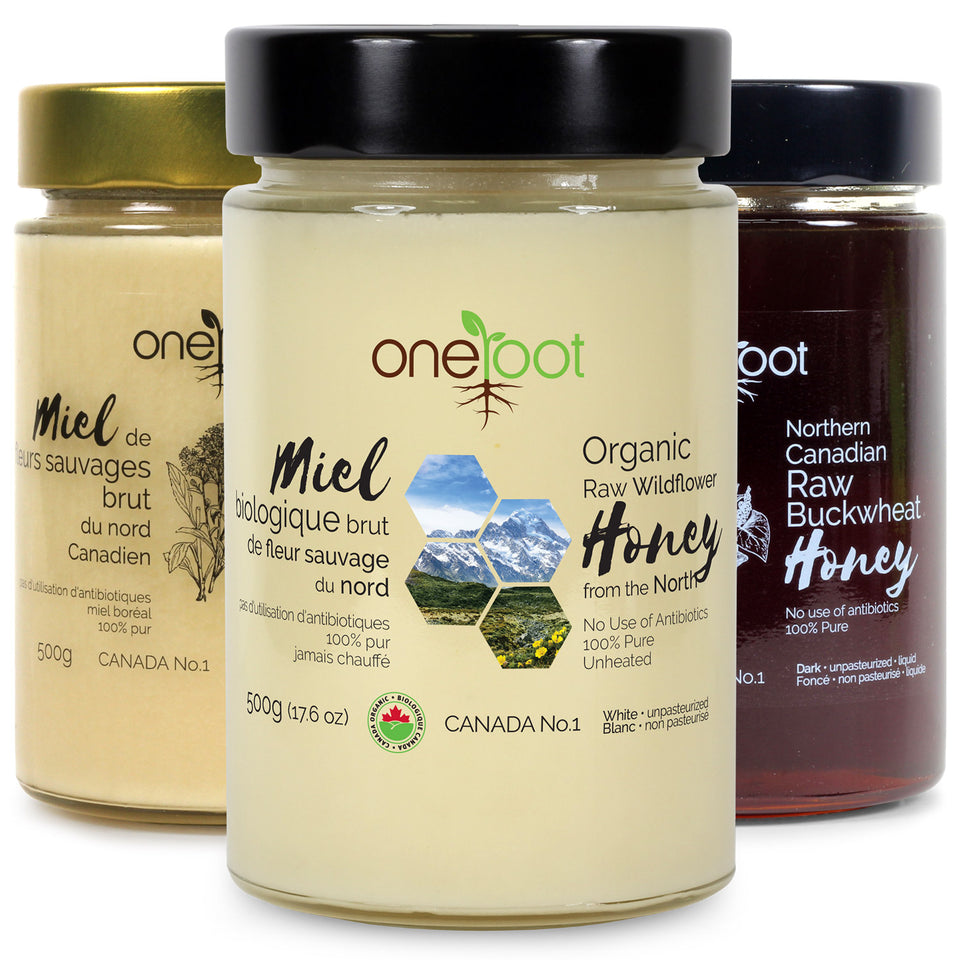
Colour of Honey
The colour of honey varies depending on the season and type of flowers the bees gather nectar from. Generally, Spring honey has the lightest colour and Autumn honey has the darkest colour. In terms of floral sources, acacia and clover honey are light in colour whereas buckwheat and manuka are very dark in colour. In Canada, the official colour gradings are: White, Golden, Amber, and Dark. You can look for them on your honey jar.
Difference in Aroma and Flavour
Just like colour, each honey will have different taste and aroma. If it’s an unheated raw honey, it will be easier to distinguish one honey from another. For example, Spring and early Summer honey from wildflowers will have subtle and light floral scent, and autumn’s buckwheat honey will have a strong aroma of malt and molasses. Heather honey from Europe will have almost a fruity scent to it.
Honey Crystallization
Depending on the floral source of the honey, the rate at which the honey crystallizes will vary greatly. Naturally, honey is high in sugar and low in moisture, and thus chemically, it’s not a substance that can remain liquid. Once the crystal particles start to form, the entire jar of honey can solidify within days. The rate of crystallization depends on the honey’s fructose and glucose ratio. Fructose is more easily soluble in water opposed to glucose which is less soluble. Therefore, if the honey has more glucose than fructose, it will crystallize faster. This also indicates that clover honey has higher level of glucose than buckwheat honey. The chart below shows some examples of honey and their crystallization speed.
|
Type of Honey |
Crystallization Speed |
|
Acacia |
Very Slow |
|
Cranberry |
Very Slow |
|
Sage |
Very Slow |
|
Buckwheat |
Slow |
|
Chestnut |
Slow |
|
Orange |
Slow |
|
Maple |
Slow |
|
Rosemary |
Slow |
|
Clover |
Fast |
|
Apple |
Fast |
|
Dandelion |
Fast |
|
Lavender |
Fast |
|
Goldenrod |
Fast |
|
Raspberry |
Fast |
|
Sunflower |
Fast |
This crystallization process only applies to unheated raw honey. For example, if you have a jar of sunflower honey that’s not crystallized even after several months, your sunflower honey has been heated and heavily filtered.
Honey that crystallizes fast can start to crystallize within days of extraction. On the other hand, buckwheat honey can stay liquid for a year. Honey that crystallizes fast will usually have finer crystals, and honey that crystallizes slow will usually have larger coarse crystals. Some people mistakenly use these characteristics to judge honey’s quality. All types of honey will have different characteristics based on its chemical makeup.
Raw honey will have more pollen, propolis, and beeswax and this will also speed up the crystallization process as they act as a seed for the crystals.
Different Components of Honey

Honey is mostly made up of various sugars and water. This is an average makeup of honey and each honey variety will have different components with difference percentages. The 1% in its components is very important as all the beneficial compounds are there as well as the harmful chemicals and metals that are found in some foreign honey.
TIP: It is best to keep your honey at room temperature around 20⁰C. Around 10-15⁰C, honey will rapidly crystallize. If you wish to liquify solid honey, put the jar in warm water (35-40⁰C) and slowly stir. It’s not recommended to increase the heat any higher as this will destroy the beneficial enzymes in honey.