 Free shipping over $75 CAD


Here Are Some Amazing Bee Facts You Should Know!
Here Are Some Amazing Bee Facts You Should Know!
Did you know that bees are a crucial part of our ecosystem?
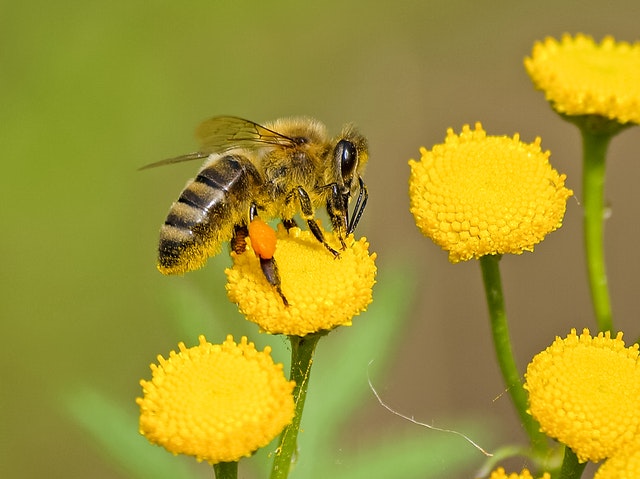
Bees play a critical role in pollinating flowers, fruits, and vegetables. This means they aid in the growth of other plants! Pollen is transferred between male and female portions of plants by bees, allowing seeds and fruit to grow.
They also produce honey which has a wide range of health benefits. It’s good for your skin, hair and overall health.
Interesting Facts About Bees!
Here are some cool bee facts that you need to know.
Fact 1: They have a Hierarchy
Hives or colonies are where honey bees live, and they have a pecking order. The hive's members are separated into three groups: The Queen, The Workers and Drones.
Fact 2: The Queen Is in Charge
A single queen governs the hive. Her role is to lay the eggs that will become the next generation of bees for the hive. Chemicals produced by the queen also guide the behaviour of the other bees.
Fact 3: Workers Bees Are All Female
They’re all females, and their jobs include foraging for food (pollen and nectar from flowers), constructing and protecting the hive, and cleaning and circulating the air by beating their wings. The only bees most people see flying around outside the hive are workers.
Fact 4: Drones Are All Men
These are the male bees; whose job is to mate with the new queen. During the spring and summer, each hive can house several hundred bees. However, when the hive enters into survival mode in the winter, the drones get kicked out.
Fact 5: They Maintain A Consistent Temperature
Bees have a way of staying warm as the temperature drops. They form a tight clump within their hive to keep the temperature at 95 ° F. Workers form a protective ring around the queen, shielding her from the elements. Workers use their wings to fan the air inside the hive in the summer, preventing the queen and brood from overheating. From several feet away, you can hear the sound of all those wings pounding inside the hive.
Fact 6: Bees Are Great at Construction
The youngest worker bees make beeswax, and workers use it to build the honeycomb. Eight paired glands produce wax droplets on the underside of the abdomen, which harden into flakes when exposed to air. The employees use their tongues to soften the wax flakes into a malleable construction material.
Fact 7: Bees Are What They Eat
You are what you eat, and this is especially true when it comes to honey bees. The sort of bee that hatches from each egg depends entirely on the larvae's diet. The larvae that develop into queens are solely fed royal jelly. Female workers emerge from bees given fermented pollen (bee bread) and honey.
Fact 8: Queen Bees Value Genetic Diversity
The queen will collect sperm from 12 to 15 drone bees on her mating trip to guarantee her colony's genetic health and variety.
Fact 9: Bees Have Their Language
Pheromones, which are passed on during feeding, are used by honey bees to communicate. This is known as trophallaxis.
Fact 10: They Have an Amazing Sense Of Smell!
Each bee contains 170 odorant receptors, indicating a keen sense of smell. They utilize this to communicate among the hive and recognize different flowers when seeking foods.
Bees are amazing creatures. They produce one of nature’s most incredible foods: Honey. If you’re searching for organic honey? One Root has a selection of pure raw honey and delicious flavour.
From Flowers To Bottle, How Bees Make Honey 🐝 🍯
Honey bees produce 75 million pounds of honey each year and are responsible for pollinating many fruits and vegetable crops, nuts and oil seeds like canola. Honey bees alone are responsible for contributing 4.6 billion in value to the Canadian economy alone.
The process of honey making is something many people think about. After all, how can bees make something so delicious? It might be worth asking why bees make honey before I get into how they make it.
Why Do Bees Make Honey?
Although honey is nutritious and tasty, bees do not make it for human consumption. In fact, honey is made by bees to feed themselves. Honey is their food source, and it is what they give to their young to help them grow. The reason bees produce honey in abundance is so that they can feed themselves during the colder winter months when it is difficult to leave the hive due to inclement weather and when there is a limited supply of flowers from which to collect the nectar they need.
By over-producing honey in the spring and summer, bees can store it and use it to feed the entire colony during the winter. This is why it is important for beekeepers to leave enough honey in the hives for the bees to survive the winter.
How is Honey Made? The step by step honey-making process
Now that you know why bees make honey, we can talk about how they actually make it. And make no mistake, this is truly remarkable.
Something you might not know is that not every bee is capable of making honey. It is only the honeybee that can produce this sweet food source. Another interesting fact is that one single worker bee will ‘only’ make around a twelfth of a teaspoon of honey throughout its entire life (which is, incidentally, around six weeks). This is why it takes an entire colony of bees to produce the large amounts of honey that can be harvested by beekeepers.
There are a number of steps involved in the honey-making process:
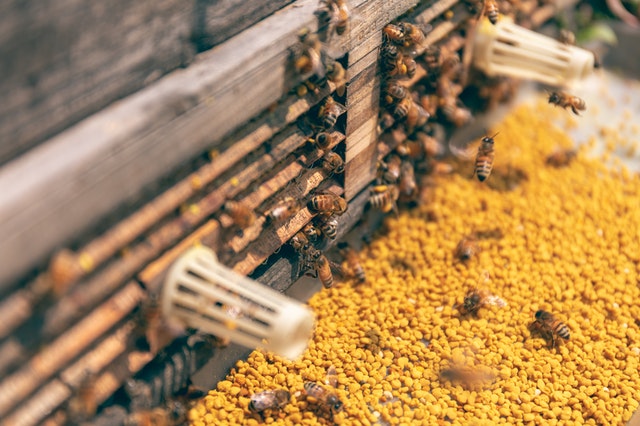
- Worker bees leave the hive in search of flowers, from which they can collect nectar. They will usually travel around four to five miles from the hive in search of nectar and pollen. Bees use their proboscis (tubular mouthpart) to suck nectar from the inside of the flower. The honeybee will typically visit over one hundred flowers on each trip. The collected nectar is stored in the bee’s honey stomach, ready to be taken back to the hive.
- In the hive, other worker bees (also called house bees) are waiting to begin making honey. When the foraging bees return, they pass the nectar from their honey stomachs to the house bees, who then chew it up before passing it along to another bee. This process continues until the nectar turns to watery honey.
- Before the honey can be stored for the winter, it must be dehydrated. Although some water is removed during the chewing process, it still contains too much at this stage. Bees will spread the honey out across the honeycomb, allowing water to evaporate from it. To speed up the process, the bees will set about flapping their wings near the honey. This increases airflow and ensures that more water evaporates.
- When the water content is down to just under twenty percent, the bees can begin the final stage, which is capping the honey with beeswax. When the honey is ready, and the water content is at the right level, the bees will place it in a honeycomb cell and then cap it with wax that they have secreted from glands at the rear of their abdomen. The capping of honeycomb cells helps to keep the honey fresh.
Do Bees Starve if We Take Their Honey?
Because we know that bees make honey primarily as a food source for themselves, the question of whether they would starve when humans take their honey is a legitimate one to ask.
Yes, a colony of honeybees could starve to death if too much honey is taken from their hive before the winter. Unfortunately, it is a mistake that novice beekeepers often make, especially when the new hive has not had time to build up enough stores.
Experienced beekeepers know that a new hive will need time to establish its honey stores and so will very rarely take honey from the hive in the first year. It may even be necessary to supply sugar syrup as an additional food source for the bees over the winter.
Can Bees Have Too Much Honey?
Taking too much honey from beehives can leave the colony starving, but what happens if you harvest too little honey – or none at all?
If excess honey is not harvested, a colony will soon outgrow its hive. Honeybees spend their lives working for the good of the colony, and this means producing honey in abundance. They will make more than they need for food so that they can store it for use when they are unable to collect nectar. However, they do tend to overproduce, so unless the excess honey is harvested, the bees will eventually run out of room to store it.
If the bees run out of room in the hive, they will have no choice but to swarm.
How Often Should Honey be Harvested?
Those new to beekeeping often make the mistake of taking too much honey and leaving the colony with insufficient food stores for the winter. With that in mind, it is worthwhile knowing how often honey should be harvested from a hive.
There is no set rule as to how many times you can harvest, and experience will give you the most definitive answer. How much honey that you take will really depend on how much your bees are producing, which will, in turn, depend on a number of factors such as time of year, weather conditions, and the number of flowering plants near the hive.
Most beekeepers will harvest honey either once or twice per year, with very little (or none at all) taken in the first year. It is important to only take cured, capped honey from the hive and, as a rule, only harvest when the frame is more than three-quarters full.
Summary
Only honey bees make honey, and they do so to feed the colony. However, bees tend to overproduce to ensure they have enough food to survive the winter, a time at which they cannot forage for nectar.
Bees follow a step-by-step process when making honey. Worker bees will leave the hive to collect nectar. When they return to the hive, they pass the nectar that has been stored in their honey stomachs to waiting bees, who then chew it and pass it along to other bees until it has turned to honey.
The honey must then be dehydrated before it is stored in honeycomb cells and capped with beeswax for freshness.
Because bees use honey as a food source for themselves, it is important that beekeepers do not take too much as they could leave the colony starving during the winter. Taking too little could mean the colony outgrows the hive and swarms.
Here at OneRoot, we strive to provide the best-tasting, cleanest products to you and your loved ones. We also strive to provide the best care for our planet and all its beings. Organic Life Magazine recently wrote, “The bees take care of us. We need to take better care of them.” We completely agree. Take care of you, take care of the bees, and take care of our planet.
Join us today on our mission to take care of our planet. Shop OneRoot for your premium organic honey.
https://www.sciencefocus.com/nature/how-do-bees-make-honey/
https://www.ontariohoney.ca/educators/the-honey-bee
https://en.wikipedia.org/wiki/Honey#Classification_by_packaging_and_processing

Make your home smell better with beeswax candles
Make your home smell better with beeswax candles
What’s the buzz with beeswax candles? Quite a bit, as the natural alternative is a far healthier replacement to paraffin or petroleum-based options. Rather than being linked to cancer, beeswax cleanses the air and often helps support beekeepers.
That’s right.
Honeycomb is harvested without any harm to our fuzzy friends, honey bees. Nature is just telling us to use this fantastic resource. Beeswax has a naturally sweet and floral scent that is subtle yet noticeable.
What is paraffin wax?
Paraffin wax is a byproduct of a petroleum refinery. Like all petroleum-based products, it starts as crude oil. After several other petroleum-based products have been extracted off, the wax is left as a byproduct of the refining process. The wax is then treated with benzene and or toluene (known carcinogens) to bleach the wax.
It is thought that the chemicals in the paraffin, along with benzene and toluene, have an adverse effect on health. Paraffin has a high smoke rate which emits particles into the air that can settle in the lungs.
Artificial fragrance and scents
While the debate about the dangers of paraffin wax and artificial fragrances continues, (The National Candle Association claims that tests have been performed for years ensuring the safety of burning paraffin candles. However, impartial parties claim that these fragrances can trigger allergies, asthma, lung irritations and even damage to the brain and central nervous system.
Why beeswax is best
Beeswax, when burned, has a very low smoke emission. It has a light honey scent that occurs naturally. The only process in creating a beeswax candle is in the melting and pouring steps. There are no chemicals used to refine 100% beeswax.
Not only do beeswax candles not contribute to air pollution, they have also been found to actually clean the air. Beeswax releases negative ions into the air when burned. These ions bind with pollutants and remove them from the air.
What about fragrance?
Thankfully, beeswax candles are often scented with natural fragrances like essential oils. These essential oils can also provide health benefits like air purification and aromatherapy.
Ready to try beeswax candles? Choose from OneRoot Honey's Collection of beeswax candles to experience the beauty and allure of Beeswax candles in your own home!

Why is organic honey good for you?
Why is organic honey good for you?
If you are considering buying honey, organic honey will be your best option. Taking it prevents you from being exposed to the chemicals honey may get exposed to during conventional beekeeping practices.
Make life sweeter with organic honey
Organic honey starts as flower nectar collected by bees. Its sweetness makes it an excellent sugar alternative. That is why research suggests that taking it instead of sugar prevents the risk of getting diabetes.
Amazing! It’s long-lasting: How long does organic honey last?
If stored properly, honey can last a very long time. It can remain stable for decades…or even centuries! Honey is susceptible to changes during storage. It changes color, and it crystallizes. However, this does not affect honey’s shelf life as long as it is stored in a cool and dry place.
What makes organic honey better?
Organic apiculture in Canada is governed by the Canadian Organic Standards. Organic certification requires a forage area that provides a 3 km radius (or 28 sq. km) around the hive that is free of prohibited substances. This eliminates beekeepers that are located near conventional farms, golf courses, or factories. Organic beekeepers must also attempt to source organically raised replacement bees, must feed with organic honey, and must use organic beeswax for comb foundations. True organic certified honey is extremely rare.
This extra effort ensures the honey is not contaminated with pesticides and antibiotics. You also need to note that not every organic honey is the same. Organic honey produced in Canada is different from organic honey from the US or other countries. Canada has a strict set of rules for organic beekeeping, and not every country follows the same rules. So, make sure to read the ingredients and make sure the jar is 100% Canadian organic honey.
Give us a short, sweet visit: Where can I buy organic honey?
At Oneroot, we believe in the incredible power of nature to bring wellness and healing. We work hard to produce honey from the cleanest lands in Northern Canada.
View our collection of healthy and organic honey, and start discovering its amazing benefits for your body!

Raw honey vs Commercial honey
Raw Honey vs. unpasteurized honey vs. pasteurized honey: Know the difference
Whenever you visit the local farmer's market or a grocery store, you’ve probably noticed that some honey are labeled ‘pasteurized,’ and some are ‘unpasteurized’ or ‘raw.' While these labels may seem confusing, it is important to know the difference.
What is raw honey?
Raw honey is the type of honey that is sourced directly from the honeycomb. It is not filtered or processed and does not undergo high-temperature heating or processing. It remains in its natural state and pure form. Although it looks a little cloudy, it is safe to consume.
What is unpasteurized honey?If honey has not undergone heat treatment of 72℃, it is unpasteurized. It may still be heated to lower temperatures and then filtered. Unpasteurized does not mean raw.
What is pasteurized honey?
On the other hand, pasteurized honey is the kind of honey we usually see in the supermarket. It has a cleaner and more liquid texture. It has been heated to 72℃ and filtered. During pasteurization, honey loses most of its nutritional values including pollen, thus making it only a pure sweetener.
What is the healthiest honey to consume?
Raw honey is considered to be nature’s gold. It contains a wide variety of nutrients, antioxidants, and antibacterial properties. It also helps feed the good bacteria in your gut, speeds up wound healing, and soothes a sore throat.
Most importantly, it tastes so delicious.
So if you want to get healthier the natural way, choose raw honey.
Benefits of honey
Since ancient times, honey has been praised for its medicinal properties. Although there are many common claims about honey, the following are some of its known benefits.
- Serves as a good source of antioxidants
- Contains antibacterial and antifungal properties
- Heals wounds
- Has a phytonutrient powerhouse
- Helps relieve digestive issues
- Soothes sore throat
Beware of its Risks
Honey has been used as a natural sweetener and medicine for years. While it contains a nutritional value, there are health risks of taking it.
- It may contain spores of the bacteria Clostridium botulinum. This bacteria is harmful to babies as it may cause botulism poisoning. That's why babies younger than 1-year-old should never be given honey.
- It may contain natural toxins. Because bees collect nectar from various plants, sometimes they tend to include substances from poisonous plants. So if you experience nausea and vomiting after taking honey, it is recommended that you visit the doctor immediately.
- It may contain allergens. Raw honey is in its purest form, which means it may contain small amounts of pollen grains that can cause allergic reactions to some. Its reaction may range from mild symptoms such as cough to a severe state like anaphylaxis, however, a severe reaction to honey is extremely rare.
Where to buy raw honey online?
If you’re ready to enjoy the benefits of raw honey, you can buy it at Oneroot Honey. Oneroot offers a collection of natural and organic honey from the cleanest lands in Northern Canada. No jar of honey has been heated or blended. From the beehive, they all go straight to the jar.
View our raw honey collection and start shopping now!

Raw honey = Healthy skin
The beauty secret your skin needs
What is Raw Honey?
Raw honey, unlike other forms of honey, is unheated, unfiltered and unpasteurized, keeping its nutritional benefits and healing properties potent.
It is full of nutritional and healing properties for a holistically healthier you - inside, out!
Considered the least processed of all, raw honey is often bottled straight from the hive (this is the only kind you want), and its properties are dependent on the type of honey bee producing the honey and the flowers they may have drawn nectar from.

Why it’s so good for your skin
The addition of raw honey into your self-care routine will instantly increase circulation, resulting in healthy radiant skin. It has been proven to prevent and treat skin conditions such as acne, psoriasis, or eczema - talk about a miracle in a jar!
As a superfood with endless vitamins, enzymes, minerals and antioxidants, it’s no wonder it works so well to produce radiant, youthful skin.
Another reason raw honey is so effective in your skin care is that it’s rich in full spectrum nutrients such as amino acids, B vitamins (B6, thiamin, niacin, riboflavin, pantothenic acid), Zinc, Calcium, Copper, Sodium and more.
The ancient Greeks, Romans, Egyptians and East Indians all swore by raw honey as the most treasured beauty secret. It is also well-known as the ‘elixir of life’ and Cleopatra’s most prized beauty secret.

Raw honey = healthy skin.
So grab yourself a jar and start pampering yourself with this century-old elixir and achieve results...overnight!
Yep, we said it, you’re 24 hours away from great skin, hair and nails. Simply lather on some raw honey, sit back and let it work its magic - guaranteed to nourish, heal and soothe.
Smooth those split ends, keep your cuticles healthy with a collagen and elastin boost, soothe your dry chapped lips, and even lighten your hair with a natural peroxide alternative - it really has the power to do it all.
I bet you didn’t think you’d get all this from a jar of honey…
More benefits
Did you know organic, unfiltered raw honey has no expiration date and has been discovered fully preserved in ancient Egyptian tombs (whoa!)?
It has anti-inflammatory and anti-ageing properties (now that’s something we all could use).
Raw honey also boasts antibacterial properties that treat breakouts, absorb excess oil, and reduce the appearance of scars and pigmentation. It’s every woman’s (and man’s) secret beauty weapon!
It also aids digestion and has antibacterial properties that speed up healing and treat infections.

How to use it
With plenty of DIY masks, scrubs and potions, you can conjure up beautiful glowing skin and a healthy gut with just 1 or two scoops of this natural, unadulterated substance.
Although it has all these wonderful properties, it still needs to be applied cautiously to avoid any allergic reactions.
Do a patch test on a small area of your skin to ensure you aren’t allergic to pollen, bee venom or celery before applying to your face.
While it can be more expensive than most other types of honey (and there are over 300 kinds of honey), it is considered the most effective in treating a series of skincare problems which might still be cheaper than drug store items or luxury skincare brands.

Raw honey in Canada - Where can I get it?
At this point, you definitely want to get your hands on this miracle elixir. Be sure to check out Oneroot Honey, for premium Canadian raw honey.
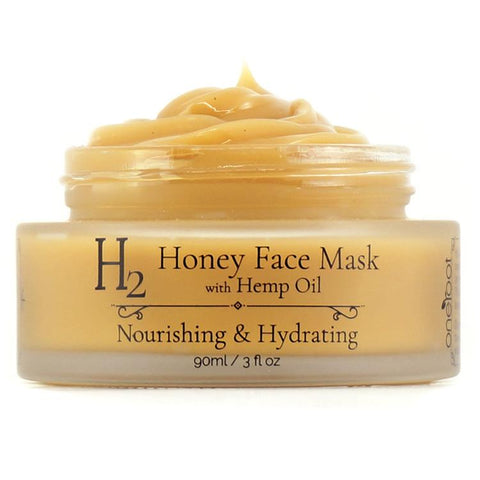
Made with Our Own Oneroot Raw Buckwheat Honey and Cold Pressed Hemp Oil, get your H2 Honey Face Mask, that will make your Skin Soft and Healthy.
Lab tested, antibiotic free, Oneroot honey is never mixed or blended, and is sourced from a healthy bee population producing the highest quality honey.

Why does Canada’s Boreal Forest have global significance?
Why does Canada’s Boreal Forest have global significance?
Did you know that the Canadian Boreal Forest biome is one of the last large intact landscapes remaining on Earth?
It’s true! It’s the Earth's largest terrestrial carbon sink and one of the most intact of the global forested ecosystems.
Thought to hold a minimum of 208 billion tons of carbon in its trees and other resources, it is of significant importance to each and every one of us. Find out why below.
What is a Boreal Forest?
First, let’s discuss what a Boreal forest is exactly. Also known as taiga, it supports locally significant biodiversity as well as globally important ecosystem services. They cover 11% of land areas, covering vast tracts of land across Alaska, Canada, northern Europe, and Russia.
These regions are characterized by harsh winters, carbon storage, clean water, and they harbor globally significant wildlife populations.
Where are boreal forests in Canada?
Millions of kilometers of the Boreal Forest biome are found in Canada! Yes, millions!
It’s no surprise then that the boreal zone stretches from Yukon and Northern British Columbia to Newfoundland & Labrador.

So, why is it so important?
The North American Boreal Forest biome’s intactness has allowed it to retain many globally significant conservation features. These include:
1. Support about 24% of the world’s individual trees.
The highest densities of trees on earth occur in the global boreal forest biomes. It is estimated to hold as many as 500 billion individual trees! This represents 16% of the world’s total number of individual trees.
2. Healthy populations of large predators.
It is the winter home of the migratory caribou and reindeer and the permanent home of many other species. The wolf and lynx are the major predators of the boreal forest. Many of which have now been listed as Endangered, Threatened, or of Special Concern.
3. Billions of nesting birds and Insects.
This includes species of chironomid flies, lepidopterans, dragonflies, beetles, and butterflies that are mostly found in the North American Boreal Forest habitat and are wetland-dependent. It is home to billions of songbirds, waterfowl, and shorebirds and is the final refuge for critically endangered species.
4. Some of the world’s largest lakes and undammed rivers.
The Forest biome encompasses millions of lakes and ponds and holds more available fresh water than any country on earth. Within the biome are four of the world’s ten largest lakes in the world that support healthy, age-structured fish populations that have become scarce under heavy fishing pressure.
5. Massive stores of carbon and ecological functionality.
The boreal forest is the single biggest source of living biomass on the planet's surface. It contains more than 30% of the total terrestrial pool, and it is therefore critically important in global carbon dynamics.
What threatens the Boreal Forest?

The majority of Canadian boreal forest regions have preserved their ecological variety. However, the increased demand for wood products has resulted in the spread of commercial logging activities into northern boreal regions.
Despite recognizing the importance of preserving old forests, forest management still predominantly employs clear-cut harvesting with short rotations resulting in the loss of biological and structural diversity.
Global climate change also threatens these forests. According to some studies, the boreal forest will contribute to CO2 in the atmosphere under the projected climate changes.
At the current rate, all boreal forests are being threatened. We’re losing 18.7 million acres of forests every year to deforestation and degradation, mainly in the tropics. That’s equivalent to 27 soccer fields a minute!
So Why Should You Care?

Well, other than the very important reasons we’ve listed above. Another really important reason is that at OneRoot, we harvest raw natural honey straight from the beehives of Boreal Forest in Northern Ontario.
Our bees are healthy since no chemicals are used. One of our primary aims is to maintain a healthy bee population. Therefore we understand the necessity to keep the woods healthy by keeping the forests healthy.
Find out more when you visit our website and discover ways you can help support the forest here.
Sources
https://www.frontiersin.org/articles/10.3389/ffgc.2020.00090/full
https://cdnsciencepub.com/doi/10.1139/er-2013-0056
https://academic.oup.com/forestry/article/90/4/485/3799586
https://www.sciencedirect.com/topics/earth-and-planetary-sciences/boreal-forest

How do honey bees survive winter? They hug!
It’s Winter...where are the honeybees?
Busy bees buzzing from flower to flower often signal that Spring or Summer is in the air.
But the absence of buzzing in Winter may leave you wondering where they go…
Well, if they are not lucky enough to live in subtropical climates, in Winter they’re probably working away to keep the ‘Queen Bee’ and their entire colony warm and alive.
Unlike most animals, bees keep ‘bzzzy’ in the Winter. Since they are cold blooded, bees have to work extra hard to stay warm in Winter when temperatures start dropping below 50°F (10°C).
With the absence of abundant plant life in the Winter, bees retreat to a cozy ‘winter cluster’ within their hives. These clusters can reach temperatures as high as 90–100 °F (32–37 °C) at the centre, and they consume up to 30 pounds of honey to stay alive.

But what is a winter cluster?
Basically a huge warm group bee hug, where female worker bees (incapable of reproducing) are fluttering and shivering away to keep the ‘Queen Bee’ and the colony warm.
Leave it to the ladies to keep their Queen safe. To do this, the female castes and worker bees band together to form a cluster, getting closer and more snug, expanding and contracting as temperatures fluctuate outside.
Honey bees strategically move around, feeding on fresh honey stores within the hive, often trading places to ensure they all stay fed and warm throughout the Winter. Plump bees usually take up the exterior cluster space as they have a longer lifespan surviving up to 4-6 months.
So what defines a successful Winter cluster that can survive the Winter?
A robust honey swarm, ready to work, plenty of honey to keep up their strength and a safe hive to call home for a few weeks.
Producing over 90 pounds of honey in the Summer is also a sure way for the bees to sufficiently survive the harsh Winter months.
How to prepare the hive...
Note to beekeepers:
Ensuring your hive has a sufficient honey reserve is crucial to their survival throughout the season, so make sure they have enough to consume.
Another important tip is to provide additional feed in the Spring before flowers start blooming - a time when starvation occurs most.
Home sweet, Home
So when the temperatures start to plummet and we’re all getting ready to spend more time indoors, honey bees are going ‘home sweet home’ for the Winter!

Interesting facts:
- Bees must visit 2 million flowers to produce one pound of honey
- Honeybees are the only insect that produces food consumed by humans
- Over her lifetime, a worker bee will only produce 1 ½ teaspoons of honey